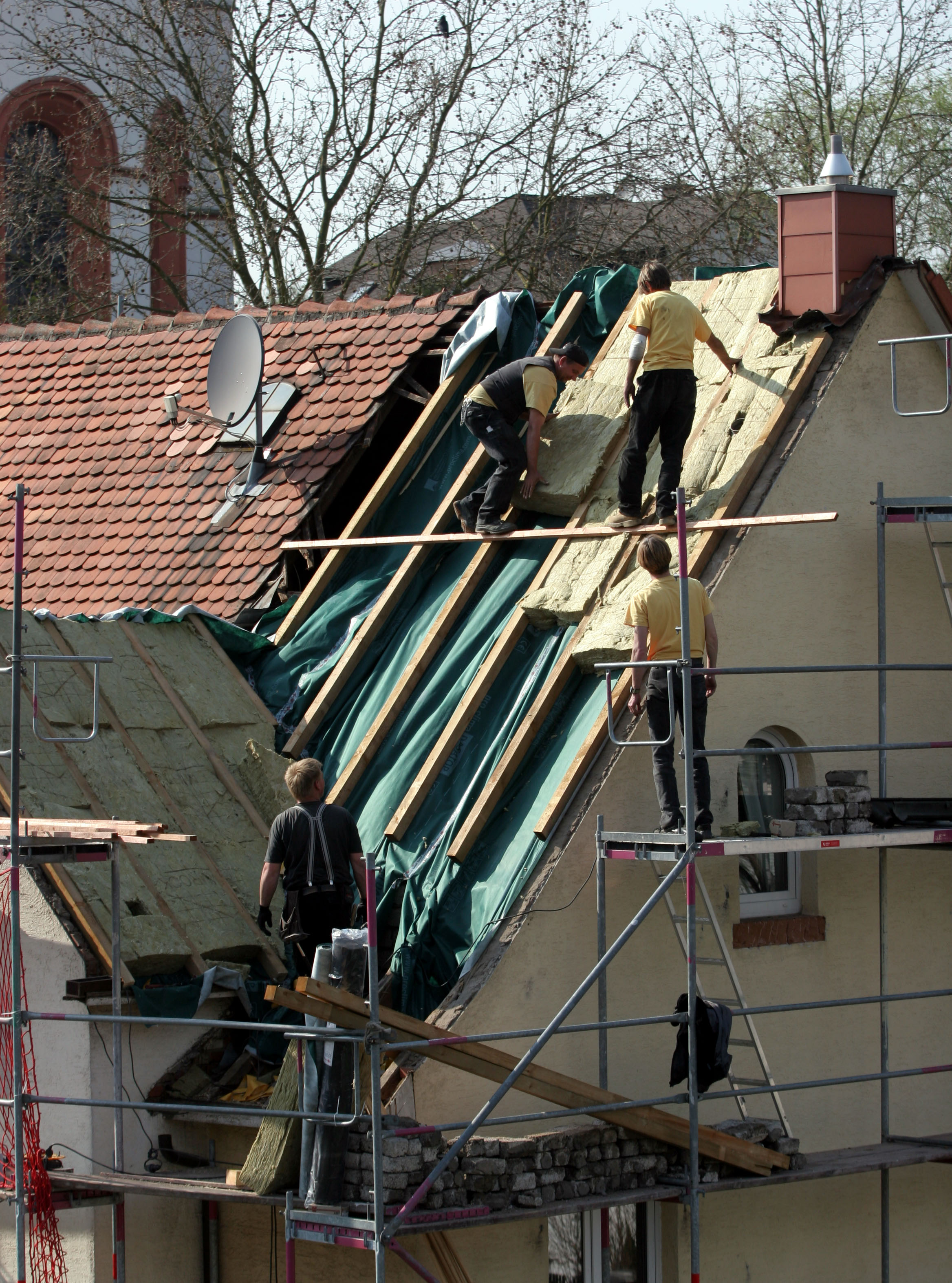
Moisture management is arguably the most complex aspect of insulating an older attic in a cold climate. Unlike thermal resistance, which is relatively straightforward to calculate from material datasheets, vapour movement through a roof assembly involves temperatures, partial pressures, seasonal cycles, and the specific use pattern of the building. Getting it wrong does not always produce immediate visible results — damage to timber structure from trapped moisture can develop over several winters before it becomes apparent.
What a Vapour Barrier Actually Does
A vapour barrier (or more precisely, a vapour control layer) limits the amount of water vapour that can diffuse from the warm, humid interior of a building into the insulation and roof structure. In winter, interior air contains significantly more water vapour than outdoor air. This creates a vapour pressure gradient that drives moisture toward the colder, drier exterior — directly through the building envelope if no barrier is present.
The material property that defines how strongly a layer resists vapour passage is the vapour diffusion resistance factor, denoted μ (mu). A foil vapour barrier might have μ = 100,000 or more. A standard polythene sheet (0.2 mm) has μ ≈ 100,000–200,000. A breathable roof membrane (folie dachowa) might have μ = 1–5. The effective vapour resistance of a layer also depends on its thickness.
The Glaser Method and Its Limits
The simplified standard approach for checking whether condensation will occur within a wall or roof assembly is the Glaser method, described in EN ISO 13788. It calculates the dew point at each layer boundary under winter design conditions and checks whether the vapour pressure at that point exceeds the saturation pressure — if so, condensation is predicted.
The Glaser method has known limitations: it uses steady-state conditions rather than the dynamic temperature and humidity fluctuations of a real building, and it does not account for capillary transport or liquid water redistribution within materials. Despite this, it remains the standard reference tool in Polish building physics practice and is used by ITB for guidance documentation.
For older rural buildings in Poland, a Glaser check on the proposed assembly before installation is a reasonable precaution, particularly when the building is occupied year-round and has high interior humidity (cooking, bathing, inadequate ventilation).
Where to Position the Vapour Control Layer
The general rule is that the vapour control layer belongs on the warm side of the insulation — meaning between the heated interior and the bulk of the insulation material. In a cold climate like Poland's, this means the interior surface or immediately adjacent to it.
For Insulated Rafters (Warm Roof Design)
When insulation fills or nearly fills the rafter depth and the attic space is heated:
- Breathable underlay (high μ resistance is a disadvantage here) on the cold side, immediately below the roof tiles or boards.
- Insulation between rafters.
- Vapour control layer fixed to the underside of the rafters, taped at all joints and around penetrations.
- Batten layer to create service cavity and protect the vapour control layer from puncture.
- Interior ceiling finish.
For Attic Floor Insulation (Cold Roof Design)
When the attic remains unheated and insulation is placed on the attic floor above the ceiling of the living space:
- Interior ceiling.
- Vapour control layer on top of the ceiling, before insulation.
- Insulation layer — mineral wool batts or loose-fill blown cellulose — on the attic floor.
- Attic floor remains uninsulated on the cold side; the attic space must be ventilated to outside air to allow moisture to escape.
Cold roof designs require adequate ventilation of the unheated attic space. In older rural buildings, this ventilation is often unintentional — gaps in the roof structure — rather than designed. Before adding insulation to the attic floor, the ventilation should be assessed to ensure that any moisture reaching the attic space can dissipate without accumulating on rafters or roof boarding.
Vapour-Variable Membranes
A development over the past two decades is the vapour-variable or "intelligent" membrane, known in Poland as folia paroizolacyjna inteligentna or membrany zmiennodyfuzyjne. These materials change their vapour resistance depending on ambient humidity: they are highly resistant in dry winter conditions (preventing inward vapour drive) and more permeable in humid summer conditions (allowing the assembly to dry out).
For intermittently heated buildings — weekend houses, seasonal farmhouses — vapour-variable membranes offer an advantage over standard fixed-resistance barriers because the assembly can recover moisture that may have accumulated during cold, unheated periods. The membrane remains vapour-open during the warmer months when the building dries out naturally.
These products are available in Poland from several European manufacturers and are increasingly used in renovation projects where the building's use pattern is irregular.
Specific Conditions in Older Polish Rural Buildings
Several factors make moisture management in older rural buildings in Poland distinct from new construction:
- No existing vapour control. Most pre-1980 construction has no vapour control layer anywhere in the roof assembly. Adding insulation without also adding vapour control can make conditions worse by moving the condensation point into the newly added insulation.
- High interior humidity. Many older rural houses rely on wood stoves or gas cookers without mechanical ventilation. Interior relative humidity is often elevated, particularly in winter.
- Imperfect air tightness. Vapour barriers work best when they are also air-tight. In older buildings with irregular ceiling structures, achieving a continuous, lapped, and taped vapour control layer is more difficult than in new construction.
- Seasonal occupancy. Buildings used only in summer or only at weekends have very different moisture profiles from those occupied continuously. Vapour control design for seasonal occupancy should account for periods where the building sits cold and unventilated.
Signs of Existing Moisture Damage
Before installing any insulation, inspect for existing moisture problems:
- Dark staining on rafters or ridge beam without roof leaks — indicates repeated condensation.
- Soft or spongey timber when pressed — indicates advanced rot, which must be treated or replaced before enclosing with insulation.
- Efflorescence (white salt deposits) on masonry walls in the attic — indicates moisture movement through the structure.
- Corroded metal fixings — indicates prolonged damp conditions.
Adding insulation to a structure with existing moisture damage without first addressing the cause and repairing the damage is one of the most common and most expensive renovation mistakes in this category of building.