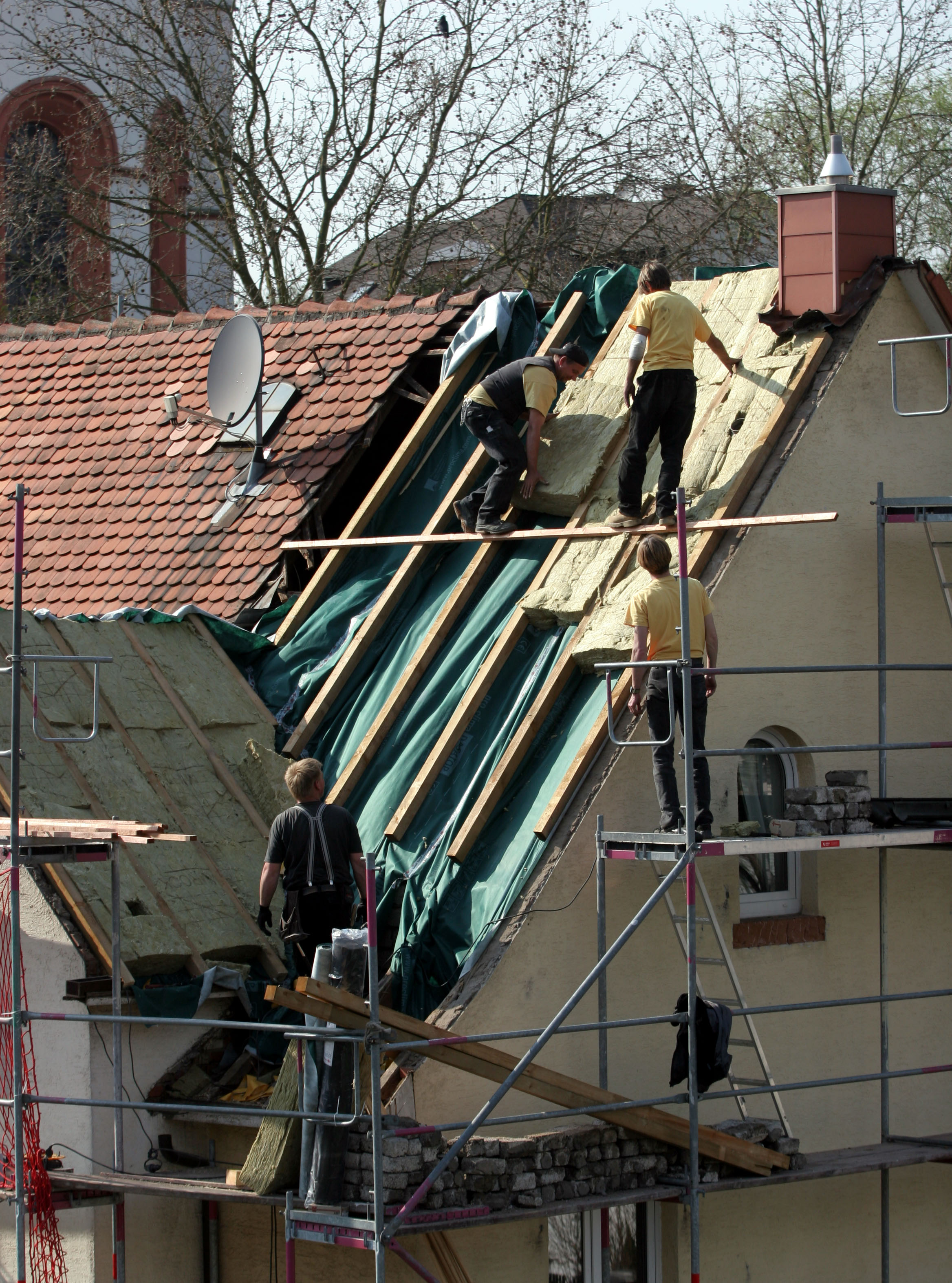
When renovating the roof of an older rural building in Poland, the choice between mineral wool and expanded polystyrene (EPS) comes up frequently. Both materials are widely available from Polish building suppliers, both meet current minimum thermal requirements when used in adequate thickness, and both can be installed without specialist equipment. The differences between them, however, are significant enough to affect long-term performance — particularly in the humid conditions that are common in unheated or intermittently heated attic spaces.
Thermal Performance
Thermal conductivity (lambda, λ) is the primary figure used to compare insulation materials. Lower values indicate better insulating performance per unit of thickness.
- Mineral wool (stone wool / glass wool): λ typically 0.033–0.040 W/(m·K) depending on density and product type. Semi-rigid batts at 140–200 mm provide sufficient thermal resistance for the rafter zone in most Polish climate conditions.
- EPS (expanded polystyrene): λ typically 0.031–0.038 W/(m·K) for standard grades. Graphite-enhanced EPS (sometimes labelled as "grey EPS" or "EPS lambda") achieves 0.029–0.033 W/(m·K), meaning slightly less thickness is needed for the same thermal resistance.
In practice, at equal thickness and within typical product grades available in Poland, the thermal performance difference between the two materials is modest. The deciding factors often lie elsewhere.
Moisture Behaviour
This is where the two materials diverge most clearly in the context of older rural buildings.
Mineral Wool
Mineral wool is vapour-open, meaning water vapour can pass through it relatively freely. Its vapour diffusion resistance factor (μ) is typically 1–3, depending on the product. This means that, in a correctly designed assembly, moisture diffusing from the interior through the insulation can exit via a breathable underlay on the cold side.
However, mineral wool does not repel liquid water. If condensation forms within the batt — because the vapour control layer is absent or incorrectly positioned — the fibres can retain moisture and lose thermal efficiency. Prolonged wetting also promotes the growth of mould within the insulation, though mineral wool itself does not support biological growth, the organic materials around it (timber, dust) do.
EPS
EPS has a much higher vapour resistance: μ is typically 20–80 depending on density. This means EPS acts as a partial vapour barrier, slowing the passage of moisture vapour through the assembly. When used as the sole insulation layer between rafters, EPS changes the moisture dynamics of the whole roof section.
In intermittently heated buildings — which describes many rural houses in Poland that are occupied seasonally or weekends only — EPS between rafters without additional vapour control can cause moisture accumulation at the inner surface of the EPS on cold winter nights when heating is off and the building cools rapidly. This is a less predictable scenario than in continuously heated buildings, and mineral wool assemblies with breathable underlays tend to handle it more consistently.
For older buildings with timber structures, vapour-open assemblies using mineral wool are generally recommended by Polish building physics guidance when the building is heated intermittently or seasonally. The reasoning is that any moisture that enters the assembly during cold periods can exit during warmer weather if the assembly allows diffusion in both directions.
Fire Reaction
Mineral wool (both stone wool and glass wool) is non-combustible — classified as Euroclass A1 under EN 13501-1. It does not ignite, does not contribute fuel to a fire, and does not produce toxic smoke in a fire scenario.
EPS is a combustible material. Standard EPS is classified Euroclass E, though flame-retardant grades achieve Euroclass B or C. In a roof assembly, the fire behaviour of insulation matters particularly in older buildings where electrical wiring may run through or near the roof space and where fire compartmentation is often absent.
This distinction is relevant not just for safety but for building compliance in Poland, where older buildings undergoing renovation may be subject to updated fire regulations if the renovation scope crosses certain thresholds.
Installation in Older Roof Structures
Between Rafters
Mineral wool batts are specifically manufactured for between-rafter installation. They come in widths that correspond to standard rafter spacings (typically 600 mm in Polish construction) and can be cut with a knife or fine-toothed saw. Friction-fit installation is quick without adhesives, though accurate cutting is important to avoid gaps at rafter edges.
EPS boards cut cleanly with a fine saw or hot wire and can be wedged between rafters, but achieving a gap-free fit is harder because the boards are rigid and do not conform to slight variations in rafter spacing that are common in hand-built older structures. Gaps between EPS board edges and rafters are thermal bridges that can offset the material's slightly better lambda value.
As a Second Layer Below Rafters
Adding a second insulation layer perpendicular to the rafters — fixed to the underside of the rafters against internal battens — eliminates thermal bridging through the rafter timber itself. EPS boards are well suited to this role as a flat board layer and are lighter and easier to fix overhead than mineral wool batts. However, this configuration requires that the interior ceiling level is dropped, which in low-ceilinged traditional farmhouses is often not acceptable.
Cost Considerations
EPS is generally less expensive per cubic metre than mineral wool in the Polish market. For thicker insulation layers (over 200 mm), this cost difference can be significant across a whole roof. In renovation budgets where thermal performance targets are the primary driver, EPS can offer better cost per unit of thermal resistance.
However, the total cost calculation should include any additional vapour control or breathable membrane components required by the specific assembly design. A vapour-open mineral wool assembly may require fewer additional layers in a building where no vapour barrier currently exists.

