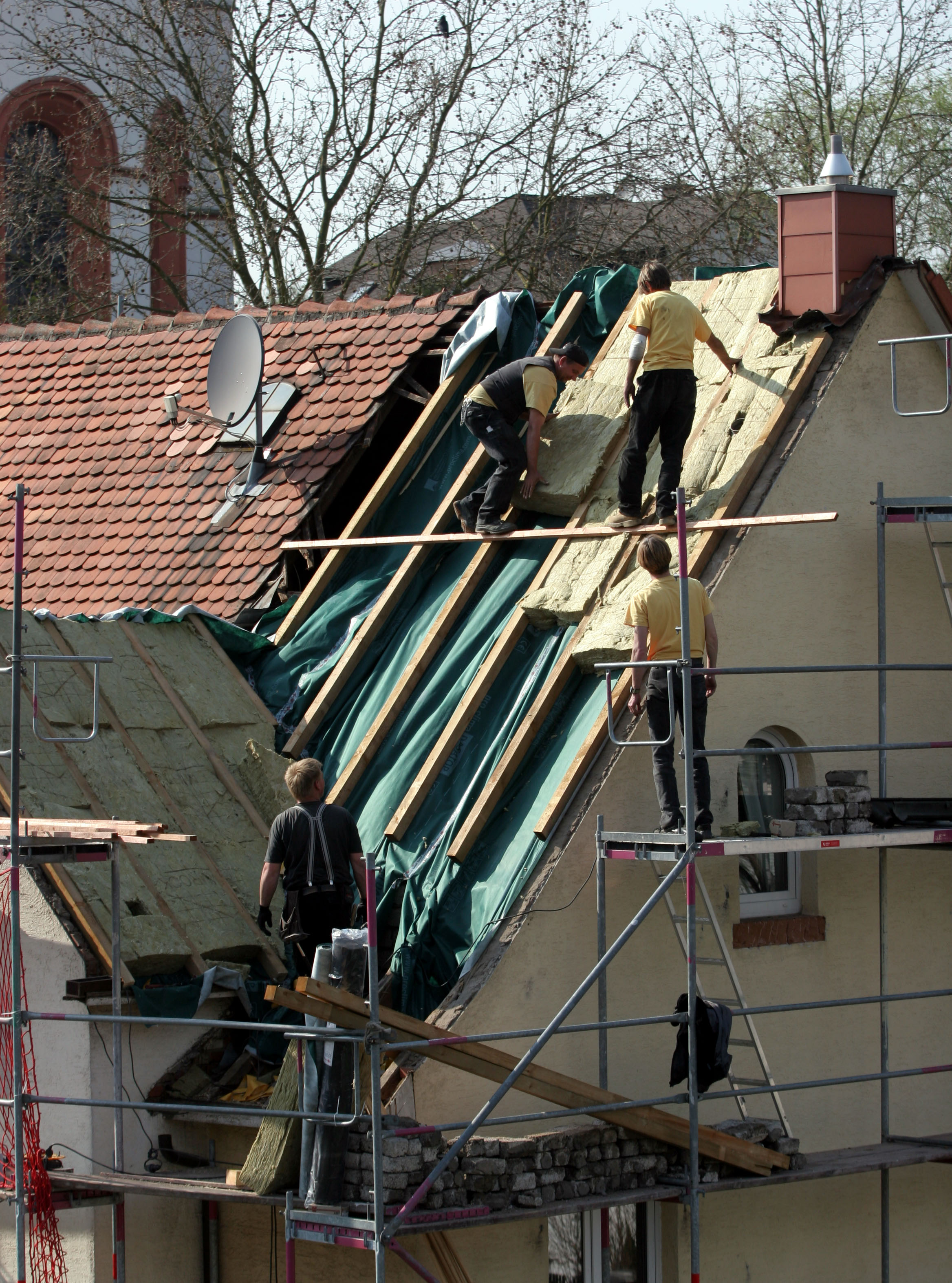
The roof ridge — the horizontal line at the top where two roof planes meet — is one of the least discussed but most thermally significant points in any pitched roof assembly. In older rural buildings across Poland, this area is frequently left without insulation, either because the original construction predated thermal regulations or because subsequent renovations focused on walls and windows rather than the roof.
Why the Ridge Matters
Warm air rises. In a heated interior, the warmest air accumulates at ceiling level and moves toward the highest point of the roof structure. If the ridge is uninsulated or poorly sealed, this warm air contacts the cold roof structure directly, losing heat rapidly and often causing condensation on timber elements. Over months and years, repeated wetting and drying cycles contribute to wood degradation even without visible leaks.
In a traditional Polish farmhouse, the ridge beam is often a single timber element spanning the full length of the building, supported by internal posts. The space between rafters on either side of this beam is typically open to the attic and, in many older buildings, directly to the roof surface with only roof tiles or corrugated sheet above.
Material Options for Between-Rafter Insulation
For the ridge zone specifically, insulation between rafters is the most common approach. The practical options depend on rafter depth, which in pre-1970 Polish construction typically ranges from 100 mm to 150 mm.
Mineral Wool Batts
Semi-rigid mineral wool batts cut to fit snugly between rafters are the most widely used material in Polish rural renovation. They are friction-fitted without adhesives and allow the timber to remain vapour-open on the cold side if a breathable underlay is used. A standard batt for rafter insulation is 100 mm thick with a thermal conductivity of approximately 0.035–0.040 W/(m·K).
Mineral wool does not absorb water as a liquid but can hold moisture as vapour. For this reason, the insulation must be positioned so that the warm-side surface is covered by a vapour control layer when the building is heated continuously.
Rigid EPS or PIR Boards
Where rafter depth is insufficient for the required insulation thickness, rigid boards can be fitted above the rafters or below them as a secondary layer. PIR boards (polyisocyanurate) offer higher thermal resistance per millimetre — typically 0.022–0.026 W/(m·K) — and are useful where headroom is a constraint. In older buildings, fitting boards above the rafter requires lifting roof covering, which adds cost.
Blown Cellulose
Blown cellulose works well in enclosed roof cavities or on attic floors. At the ridge, it is less practical unless the cavity is sealed on all sides, as it can settle and create gaps over time if not properly contained.
The Polish building standard PN-EN ISO 6946 provides the framework for calculating thermal transmittance (U-value) of roof assemblies. For a heated attic space, the target U-value under current guidance is 0.15–0.20 W/(m²·K), which typically requires 200–240 mm of mineral wool or equivalent.
Common Installation Errors in Older Buildings
Most insulation failures at the ridge level in older Polish rural buildings fall into one of three categories:
- Compression of batts. Mineral wool loses thermal performance when compressed. Batts cut too wide and forced between rafters are compressed at the edges, reducing their effective thickness. The batt should fit with light friction — not be forced.
- Missing vapour control on the warm side. Insulation installed between rafters without any vapour control layer on the interior side allows household moisture to diffuse into the insulation. In winter, this moisture condenses within the batt or at the cold face, gradually saturating the material.
- Bridging at the ridge beam. Insulation between rafters stops at the ridge beam. Without additional insulation across the beam itself, the timber acts as a thermal bridge — conducting heat directly from warm to cold side. This is often overlooked because it requires either cutting insulation to cover the beam face or adding a cross-batten layer.
Breathable Membranes and the Ridge
Breathable roof underlays (folie dachowe paroprzepuszczalne in Polish trade language) are now standard in new construction but absent in most pre-1990 buildings. When retrofitting insulation in an older roof without lifting tiles, a secondary layer of breathable membrane on the cold side of the insulation helps manage any moisture that passes through. This is particularly relevant at the ridge, where the two roof planes meet and air movement within the roof cavity can carry moisture toward this convergence point.
Practical Sequence for a Ridge Retrofit
- Inspect ridge beam and rafters for existing rot or insect damage before adding insulation. Enclosing damaged timber accelerates deterioration.
- Measure rafter depth and available cavity width. Note any existing underlay, battens, or air gaps below the roof covering.
- Select batt thickness to match or slightly exceed rafter depth, allowing for a residual air gap if a cold roof design is being maintained.
- Cut batts to length and fit between rafters, working from the eaves toward the ridge.
- At the ridge beam, cut additional pieces to cover the beam faces and fix with staples or temporary timber clips.
- Fix vapour control layer on the warm side using lapped joints taped at seams, particularly around the ridge beam.
- Add internal batten layer to hold vapour control layer and create service cavity for electrical and finishing works.